Log Home Restoration Cost in Jackson Hole: 4 Jobs, Honest Numbers
- By Cory Ramage
- Updated September 10, 2026
Log home restoration cost in Jackson Hole comes down to four jobs, and most homes need two or three of them. Media blasting runs $3 to $6 per square foot of log surface. Staining runs $1.40 to $10 per square foot depending on how much prep the finish needs. A full re-chink runs $12 to $22 per linear foot of joint. Rot repair runs from a $250 patch to $5,500 for a jacked sill log. On a typical Teton County log exterior of 2,800 to 4,200 square feet, whole-house projects land anywhere from about $9,000 for a maintenance recoat to $55,000 for a full re-chink on its own.
Log Care has restored log homes in Teton County since 2008 and prices every job from a site visit. This guide breaks down what each job costs here, what moves the number, the order to do the work in, and how to avoid paying for the same wall twice.
Want a number for your house? Request a free assessment. We inspect first and quote in writing.
What log home restoration includes
Restoration is rarely one job. A log home in the Tetons takes altitude sun on the south and west walls, snow load and splash-back at the bottom courses, and freeze-thaw cycles at every check and joint. By the time an owner calls, the finish has usually failed in places, a few logs have soft spots, and some chinking or caulk has pulled away.
Our log home restoration services cover the four jobs that fix that: media blasting to remove the failed finish, log rot repair where the inspection finds decay, staining and sealing to protect the bare wood, and chinking and caulking to close the joints. The inspection decides which of the four your home actually needs, and that is the biggest single factor in log home restoration cost.
Media blasting cost: $3 to $6 per square foot
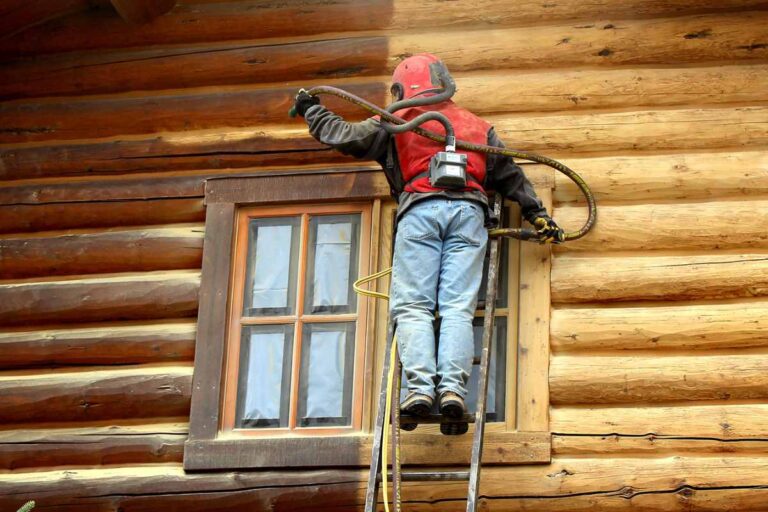
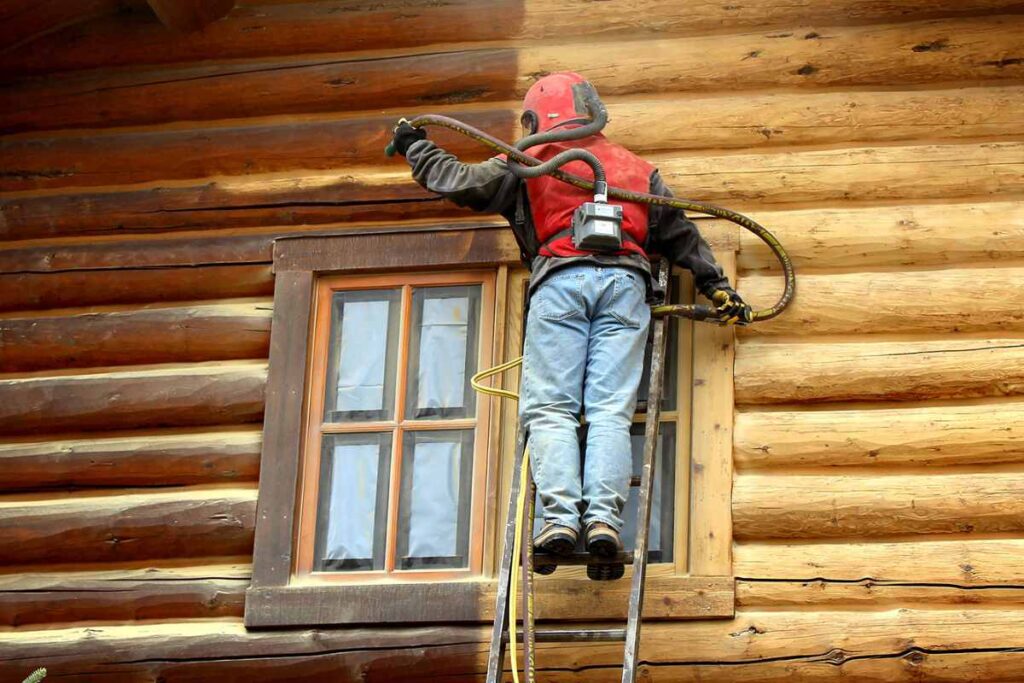
Blasting strips old stain, paint, mildew and gray weathered fibers so new stain can penetrate. In Teton County it runs $3 to $6 per square foot of log surface. A typical log home here carries 2,800 to 4,200 square feet of exterior log, which puts most whole-house blasting between $9,000 and $26,000.
Media blasting log home cost moves with wall height, log condition, the finish coming off, the media used and how much masking the property needs. Paint and solid-color stain are the most expensive finishes to remove because they have soaked into the fibers. Full detail is on our log home media blasting page.
Log home staining cost: $1.40 to $10 per square foot
Log home staining cost depends almost entirely on prep. On the same wall, these are the four levels of work and what each runs in Teton County:
- Maintenance coat over a sound finish: $1.40 to $2.90 per square foot
- Wash, brighten and two coats: $2.60 to $4.75 per square foot
- Blast to bare wood, then two coats: $5.50 to $10.00 per square foot
- Clear topcoat over stain: $0.80 to $1.60 per square foot
Most full staining projects in Jackson Hole and Teton Valley land between $9,000 and $28,000. The cheapest line is the maintenance coat, and it is only available while the existing finish is still sound. Once the finish fails, the wall moves up two tiers. South and west walls need attention every 3 to 5 years here, north and east walls every 5 to 8. Details and the finish comparison are on our log home staining page.
Chinking and caulking cost: $12 to $22 per linear foot
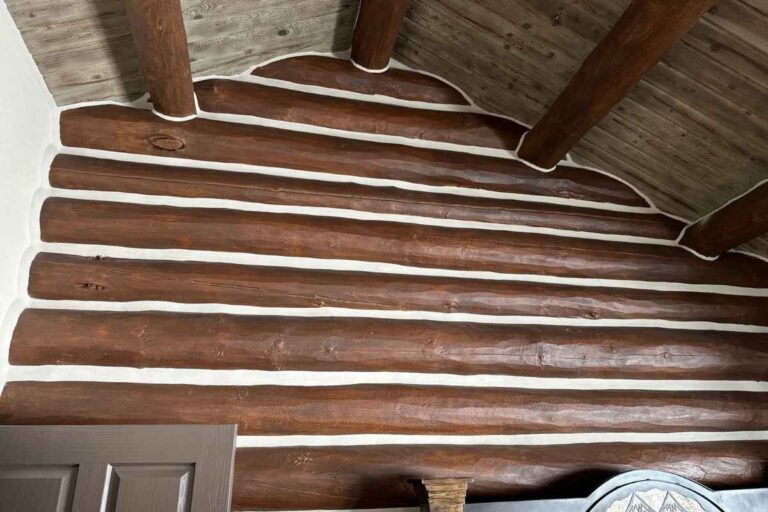
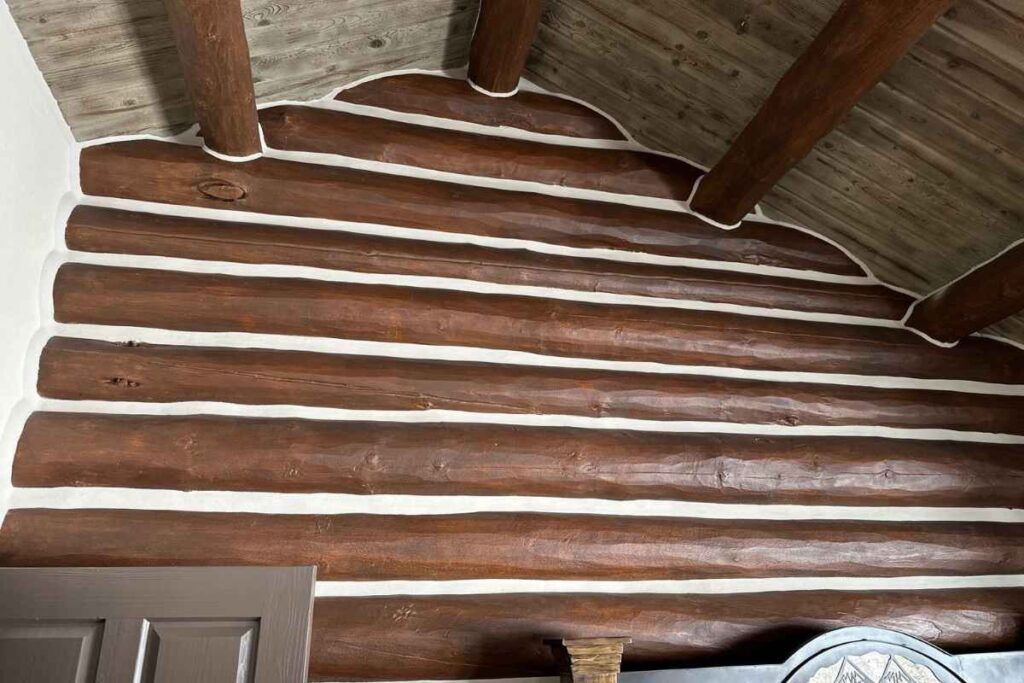
A full re-chink, which means removing the failed material, prepping the joint, installing backer rod and applying new chinking, runs $12 to $22 per linear foot in Teton County. A typical log home carries 1,200 to 2,800 linear feet of exterior joint, so most full-perimeter projects come in between $18,000 and $55,000.
That is above the national professional rate of $8 to $15 per linear foot, and the difference is removal and prep. Correctly installed elastomeric chinking should last 20 years or more, so it is the one line in a restoration budget you should only have to pay once. Our chinking and caulking page explains the difference between the two and what we use.
Log rot repair cost: from a $250 patch to a $5,500 sill log
Rot repair is priced by method, and the inspection decides the method:
- Borate treatment: $1.50 to $3.00 per square foot
- Epoxy consolidation: $45 to $95 per linear foot
- Dutchman patch: $250 to $700 each
- Half-log or facing replacement: $65 to $130 per linear foot
- Full log replacement, non-structural: $1,200 to $2,800 per log
- Full sill log replacement, jacked: $2,400 to $5,500 per log
Most complete repair projects fall between $6,000 and $40,000. Rot is the one cost you cannot see from the driveway, which is why we probe the logs before we quote. Read how we decide what gets patched and what gets replaced on the log home repair page, and why rot starts in the first place in what causes log rot.
What a whole-house restoration adds up to
Take a 3,500-square-foot log exterior with about 2,000 linear feet of joint, which is an ordinary house in Teton Valley or Jackson Hole. Using the ranges above:
- Finish still sound, maintenance coat only: $4,900 to $10,150
- Finish tired, wash, brighten and two coats: $9,100 to $16,625
- Finish failed, blast to bare wood and two coats: $19,250 to $35,000
- Add a full re-chink: another $24,000 to $44,000
- Add rot repair: whatever the probe finds, from a few hundred dollars to $40,000
The spread between the first line and the third is the cost of waiting. A maintenance coat applied while the finish is sound is the cheapest log home restoration cost there is. A wall left until the stain peels moves straight to the blast-and-recoat tier.
What moves log home restoration cost
- Height and access. Second stories, tall gables and steep sites add lift or scaffold time on every job.
- Log condition. Soft or checked wood blasts slower, needs gentler media, and turns into repair lines.
- The finish coming off. Transparent stain comes off fast. Paint and solid stain do not. This is why you should never paint a log home.
- Joint count and joint width. Chinked homes carry more linear feet and wider joints than caulked ones.
- Exposure. South and west walls fail first and often need a different scope than the north side.
- Season. The working season in Teton County runs late spring through early fall, so a job that slips can wait a year.
The right order: inspect, blast, repair, stain, seal
Order matters because each job protects the one before it. The inspection sets the scope. Blasting exposes the wood so rot can be found and repaired honestly. Stain goes on bare, sound wood within days of the blast so UV does not gray it. Chinking and caulk go on last so they bond to a finished, stable surface.
Doing it out of order is how owners pay twice: staining over rot that has to be cut out a year later, or chinking joints that then get blasted. Stain manufacturer Sashco calls surface preparation the most critical step in achieving stain longevity, and the USDA Forest Products Laboratory’s Wood Handbook notes that penetrating stains will not blister or peel even with excessive water present, which is why the finish, not paint, is what goes on after the blast.
How to keep log home restoration cost down
- Recoat before the finish fails. A maintenance coat at $1.40 to $2.90 per square foot beats a blast-and-recoat at $5.50 to $10.
- Never paint the logs. Paint traps moisture, hides rot and is the most expensive finish to remove.
- Watch the south and west walls. They need attention every 3 to 5 years. Treat them on their own schedule instead of waiting for the whole house.
- Fix water first. Gutters, splash-back and roof runoff cause most of the rot we repair.
- Get the scope in writing. It tells you exactly what you are paying for on each wall and what you are not.
Common questions about log home restoration cost
How much does it cost to restore a log home per square foot? In Teton County, $1.40 to $2.90 per square foot for a maintenance coat, $2.60 to $4.75 for a wash and two coats, and $5.50 to $10 for a blast to bare wood and two coats. Chinking and rot repair are priced separately by the linear foot or by the repair.
Is media blasting always part of the cost? No. If the existing finish is sound, a wash, brighten and recoat skips the blast. Blasting is for failed finishes, color changes and painted logs.
How long does a restored finish last? Penetrating oil stains run 3 to 5 years on south and west walls and 5 to 8 on north and east. Chinking installed correctly lasts 20 years or more.
What does a Log Care estimate include? A site visit, a written scope, the method for each repair and a schedule. Nothing is priced from a photo.
Do you serve the whole valley? Yes. Log Care works in Jackson Hole, Teton Valley and Star Valley.
Get a written estimate for your log home
The ranges above tell you what log home restoration cost looks like in this valley. The site visit tells you what your house needs. Request a free assessment or call 307-734-9563, and we will walk every elevation with you before we quote.