
Log Home Restoration · Teton County, Wyoming & Idaho
Log Home Restoration and Maintenance Services
Nine services, one crew, one contract. Log Care has worked on nothing but log homes since 2008, across Jackson Hole, Teton Valley and Star Valley. Whatever your walls need next, the same company that stains them is the company that repairs them.
- Log homes only, since 2008
- BBB accredited, A+ rating
- Idaho registration RCE-35328, active
- Shop in Victor, Idaho
The short answer
What does log home restoration include?
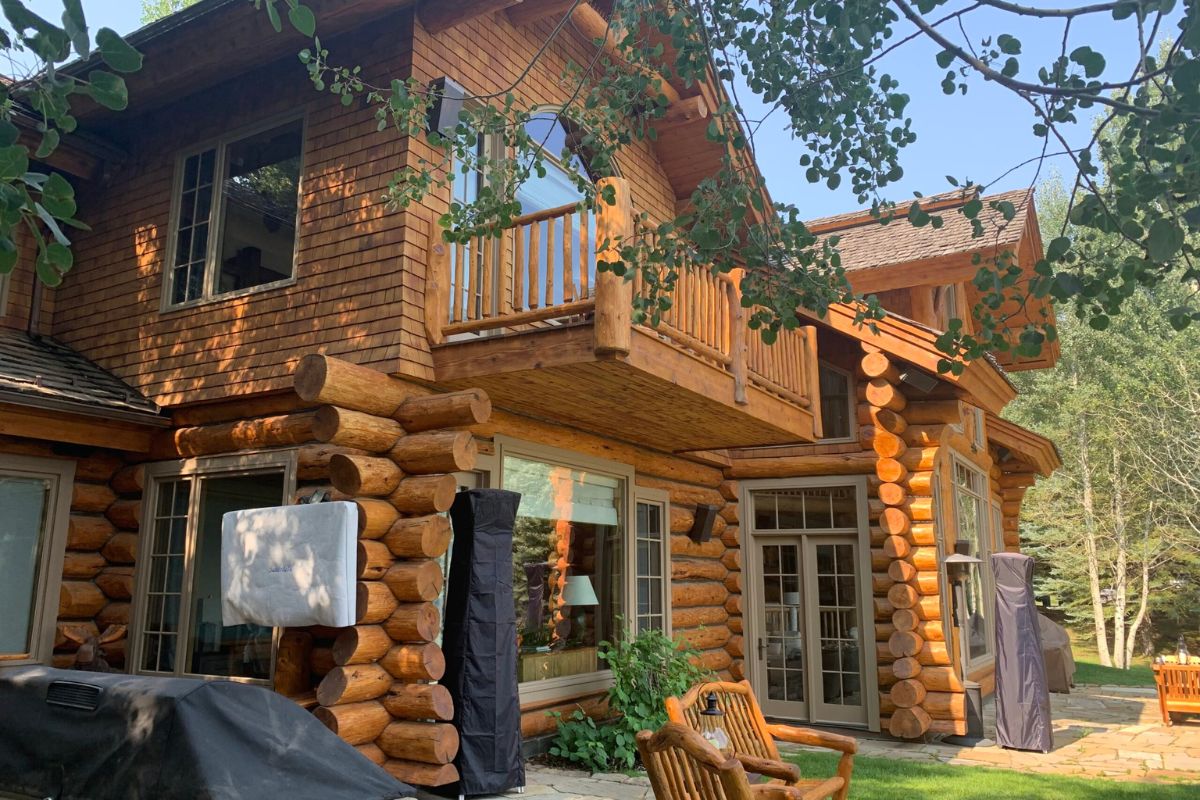
Log home restoration is the process of returning a log wall to sound, sealed and protected condition. It normally runs in order: wash or media blast the old finish off, replace any rotted logs, repair and replace chinking and caulk joints, then apply a breathable penetrating stain. Maintenance work keeps that system intact afterward.
The order is not optional. Stain will not bond to a dirty or failed surface, chinking will not hold to a rotted log, and a fresh coat over a soft sill log hides the problem for another two years. Every step is prep for the one behind it.
Most homeowners come to us for one of those steps. What they usually need is a schedule, because the wall does not stop moving and the weather does not stop working on it.
How it fits together
The order log home work has to happen in
A log home is one system, not a list of separate jobs. Doing them out of order is the most common way money gets wasted on these houses. This is the sequence, and why each step sits where it does.
Inspect and find the water
Every job starts with what the wall is actually doing. Probe the sill logs, the corner notches and the log ends. Read the joints. Where the failure is not visible, a thermal scan narrows the search. Scoping a stain job without doing this is how a project doubles halfway through.
Get the old finish off
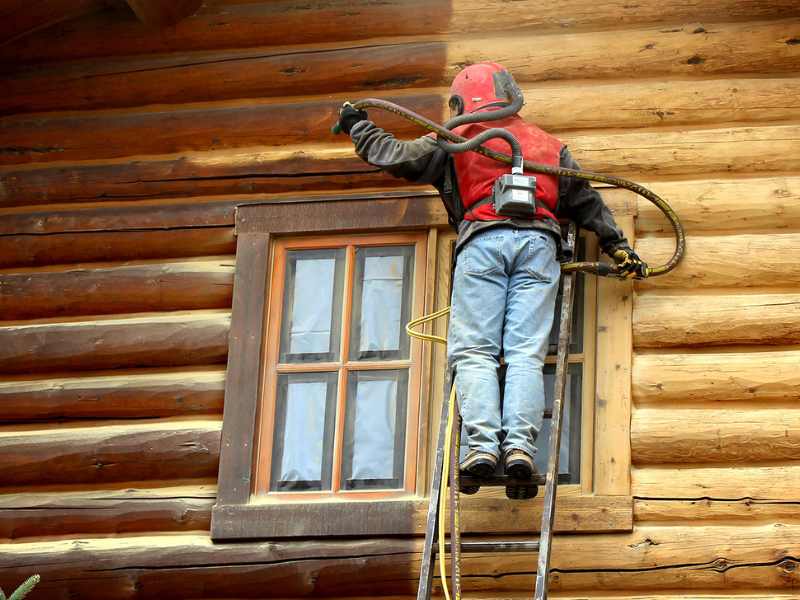
A failed film has to come off before anything new goes on. Washing handles dirt and mildew. Media blasting handles paint, failed film-forming stain, UV-gray fiber and mill glaze. Which one your walls need is a judgment made on the property, not over the phone.
Replace what has rotted
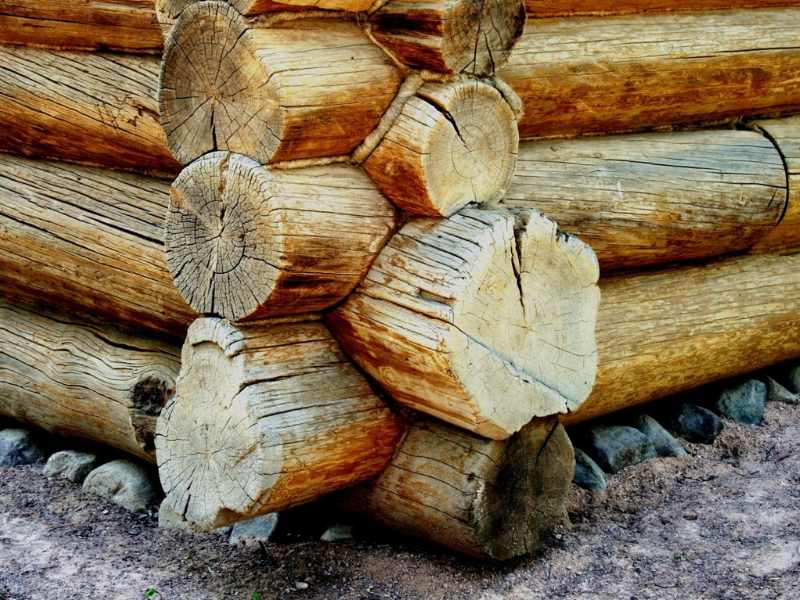
Rot is cut out and replaced while the wall is open and bare. This is the only point in the project when it is cheap to do. Once chinking and stain are on, getting back to a bad log means undoing finished work.
Seal the joints
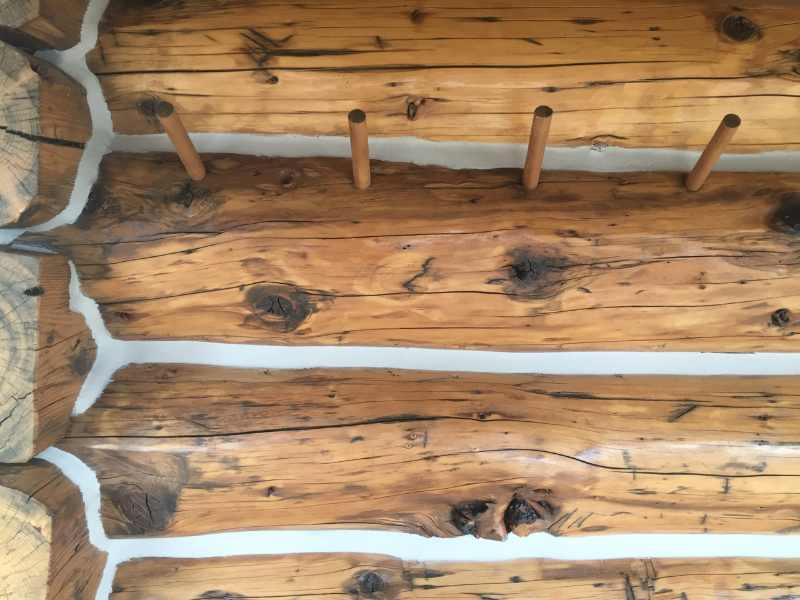
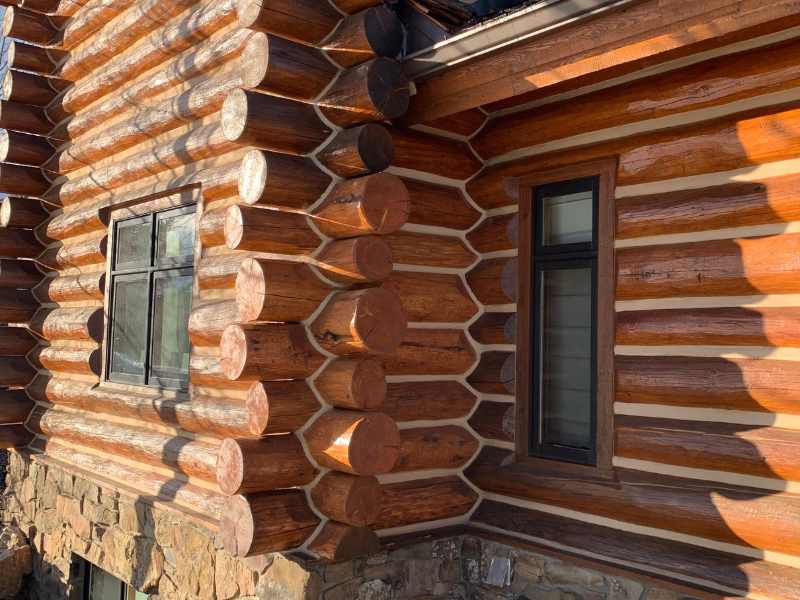
Chinking and caulk go on after the logs are sound and before the finish. The joint has to flex with a wall that keeps moving, bond to two log faces, and shed water. Most of the water getting into a log home is coming through a joint, not through the log.
Stain and protect
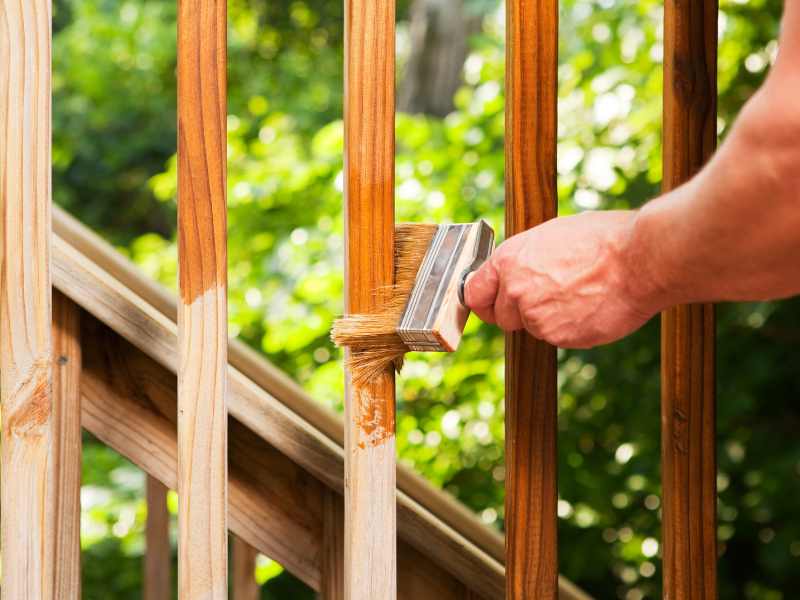
A breathable penetrating stain is the last step and the one everybody sees. It is also the one that fails first if any step above it was skipped. Roughly seventy percent of a good stain job happens before the first coat.
Keep it on a schedule
Washing, window washing, joint inspection and maintenance coats are what stop the cycle from starting over. A wall kept on a schedule costs a fraction of a wall that gets rescued every fifteen years.
Our Complete List of Log Care Services


What moves the price
What actually drives the cost of log home work
Square footage is the number people ask about and the one that matters least. On a log home, price is driven by height, access, how much has to come off, and how much of the wall is still sound underneath.
- 01
Log surface, not floor area
A 2,400 square foot log home usually has 3,000 to 4,000 square feet of log to finish, because a round log has far more surface than flat siding covering the same wall. Any quote based on floor area is guessing at the wrong number.
- 02
Height and access
A two-story great room gable with the ground falling away underneath needs lifts, staging and time. The same square footage on a single-story ranch does not. Access is the single biggest multiplier on these properties.
- 03
How much has to come off
A maintenance coat over a sound finish is a different project from blasting a wall back to bare wood. The difference between those two is usually three to four times the cost, and it is decided by the condition of the existing finish, not by preference.
- 04
What is behind the finish
Rot found during prep changes the scope. This is why we look before we price, and why a number given over the phone gets corrected upward once the crew is on the property.
- 05
Where the property is
Victor, Driggs and Jackson are a normal working day. Bondurant, Dubois, Pinedale and Island Park carry drive time, and on a multi-week project that is real money. Scheduling several services into one mobilization is the usual way to reduce it.
Every quote starts with a site visit
Call 307-734-9563 or request an assessment. We walk the property, read the joints, probe what needs probing, and put the scope in writing before anyone talks about a number.
Questions we get asked
Questions about log home services
How often does a log home need to be maintained?
It depends on exposure more than age. South and west elevations at this altitude take the most ultraviolet and the most weather, and they usually need attention years before the north side does. Rather than a fixed interval, watch the wall: water that stops beading, chalking finish, chinking pulling off one edge. Most homes in Teton County are on some kind of work every three to five years, with the sun side more often.
Do I have to do all of it at once?
No, but the order matters. Chinking a wall you plan to blast next year is wasted work, and staining over a soft log buries a problem. If the budget has to be split across seasons, we sequence it so nothing gets done twice. That plan comes out of the site visit.
Which services can be scheduled together?
Most of them. Washing, window washing and staining share access equipment. Carpentry, log replacement and chinking share a crew and a work window. Bundling several services into one mobilization is normally cheaper than calling us out three times, and on properties out toward Pinedale or Dubois the difference is significant.
Do you work on homes while the owners are away?
Constantly. Many of these houses are second or third properties and the first call comes from a caretaker or property manager. What matters is that the scope is in writing before work starts, so an approval given from another state is given against the same document the crew is working from.
What areas does Log Care cover?
Teton County, Wyoming — Jackson, Wilson, Teton Village, Kelly, Rafter J and South Park. Teton Valley, Idaho — Driggs, Victor, Tetonia and Alta. Star Valley — Afton, Alpine, Thayne, Etna, Bedford, Freedom and Grover. We also work Pinedale, Bondurant, Cora, Dubois, Moran, Swan Valley and Island Park.
Do you only work on log homes?
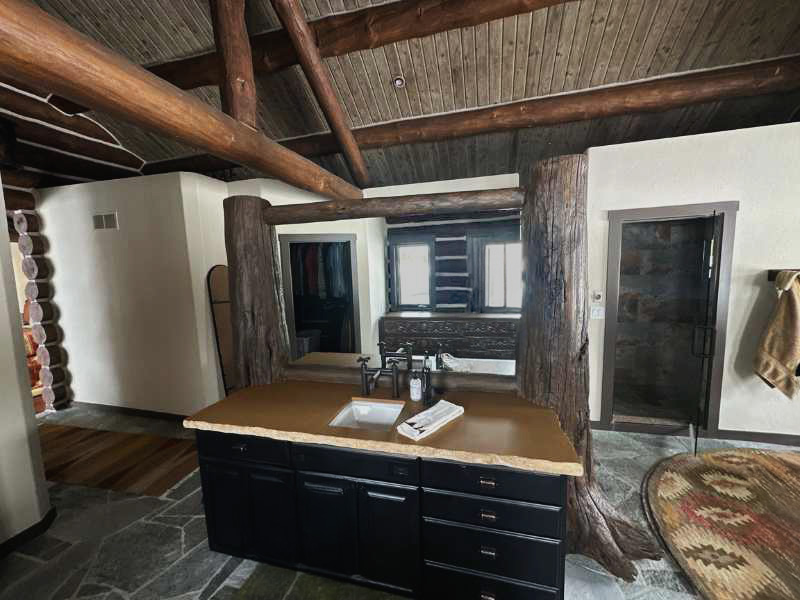
Log homes are the whole business and have been since 2008. That includes the parts of a log home that are not log — the fascia and soffit, the framed dormer, the metal railing, the drywall inside. What we do not do is take log work as a sideline to a painting company.
Keep reading
Where to go next
House Painting
The ninth service. Trim, soffit, doors, dormers and interiors — everything on the house that is not log.
Read moreService Areas
Every town we cover across Teton County, Teton Valley, Star Valley and beyond.
Read moreAbout Log Care
Who is on your property, what we are licensed for, and how we work.
Read more