
Pressure Washing & Soft Washing · Teton County
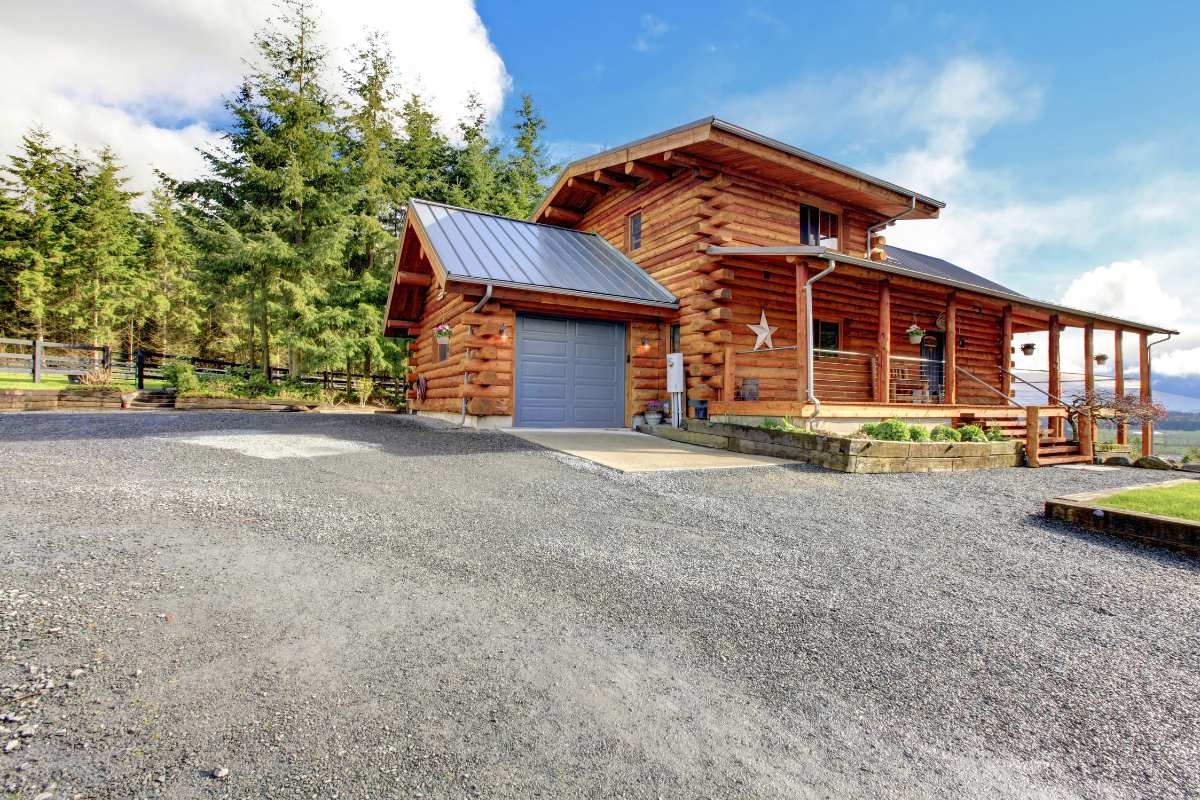
Pressure Washing for Log Homes in Jackson Hole and Teton Valley
Most of the log damage we get called to repair was caused by somebody pressure washing it. Furred grain, blown chinking, water driven deep into checks. A log wall almost never needs high pressure. It needs the right chemistry and a light rinse.
- Log home restoration only, since 2008
- BBB accredited, A+ rating
- Idaho registration RCE-35328, active
- Shop in Victor, Idaho
The short answer
Can you pressure wash a log home?
You can wash a log home, but it should almost never be washed at high pressure. Wood fiber begins to break down around 500 to 800 PSI. A correct log wash is a soft wash: a cleaner does the work, and water at low pressure rinses it off. High pressure belongs on stone and concrete, not on logs.
Treat that PSI figure as a ceiling, not a target. Most of the cleaning on a log wall happens well under it, and a good share of it happens with a brush and with dwell time rather than with water at all.
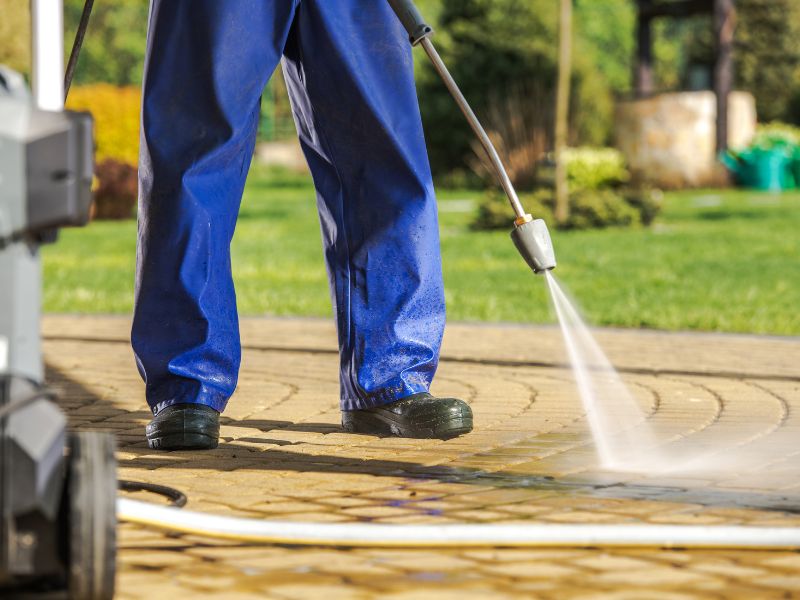
High pressure does have a place on these properties. Concrete flatwork takes 2,500 to 4,000 PSI. Stone and pavers take less. Logs take almost none. A contractor who runs the same tip and the same pressure across all four surfaces is going to wreck one of them, and at Log Care we can tell you which one it will be.
What high pressure does
What a pressure washer actually does to a log wall
A pressure washer removes what it hits. On a log wall that includes sound wood fiber, chinking, caulk joints and the stain film. The damage looks clean the day it is done. It shows up the following season.
Raised grain and furring
Water above roughly 800 PSI breaks down the lignin that binds wood fibers together. The fibers lift. The wall dries fuzzy. Stain applied over furred wood bonds to loose fiber instead of solid wood, and it can peel inside a single season.
Water driven into checks
Every log has checks. They run deep and they hold water. A wand aimed straight at a wall pushes water into those checks and past the log joints, where it sits. Nothing on the surface tells you it is there. Rot starts on the inside and works out.
Chinking and caulk blown out
Chinking bonds to the log on two edges. Hit that bond line at close range and the seal separates, or the bead comes off the wall entirely. Worse is a partial failure: the joint still looks intact, and water now runs behind it every time it rains.
Wand marks that never sand out
A zero-degree or turbo nozzle carves wood in seconds. Even a fan tip held too close leaves furrows and washboard lines down the log face. Those marks are cut into the wood, not sitting on it. Removing them means taking the entire wall to a new surface.
Stain stripped in patches
Pressure does not remove a finish evenly. It takes the weak areas and leaves the sound ones. You end up with a wall that is half stripped and half coated, with no way to blend the line between them. The fix is stripping or blasting the whole elevation.
Damage you find years later
The expensive failures are the quiet ones. Water sitting behind a chink line or down in a check does not announce itself. By the time a soft spot shows at a corner notch or a sill log, the repair is carpentry and log replacement, not a wash.
The right method
How a log home should actually be washed
A log home wash is a chemical process with a rinse at the end. The cleaner lifts the growth and the dirt. Water carries it off at low pressure. Pressure is the last variable we raise, not the first one we reach for.
- 01
Walk the wall before anything gets wet
We look for failed chinking, open caulk joints, soft wood at notches and sills, and checks that are already holding water. A wall with broken seals does not get washed until the seals are dealt with. Washing a compromised joint is exactly how water gets behind it. That same walk tells you what the stain job is going to require.
- 02
Protect the site first
Landscaping gets soaked with plain water before any cleaner goes on, and high-value plantings get covered. Light fixtures, outlets, window seals and door hardware get checked. Everything gets rinsed again afterward. On these properties the plantings and the stonework are a real part of the budget, and they are easier to damage than the logs are.
- 03
Chemistry does the cleaning
The cleaner is chosen for the surface. On bare or weathered logs that means a sodium percarbonate cleaner, which lifts dirt and gray without attacking lignin the way chlorine does. On stone, masonry and coated surfaces, sodium hypochlorite with a surfactant is the right tool. The surfactant is what makes it cling to a vertical wall instead of running off before it works.
- 04
Agitate, then rinse at low pressure
Soft brushes do the work the pressure would otherwise do. The rinse runs through a wide fan tip, twenty-five to forty degrees, held a foot or more off the wall and angled about forty-five degrees so water sheets across the logs instead of driving into the joints. Cold water only. Hot water lifts sealant and softens existing finish.
- 05
Neutralize and brighten
Cleaners are alkaline. Stain needs wood near neutral, roughly pH 6 to 8, or it will not bond. An oxalic acid brightener neutralizes the cleaner, pulls out tannin and iron staining, and evens the color across the wall. Skip this step and the stain job that follows inherits the problem.
- 06
Dry it, then measure it
Surface dry is not dry. Water sits in checks long after the face of the log looks ready. Most stain manufacturers want the wood at fifteen percent moisture content or lower, and a meter is the only way to know. In this climate that is usually several days after a wash, longer on north walls and longer after weather.
What it costs
What washing costs in Teton County and Teton Valley
Most log home washes in Teton County and Teton Valley land between $1,400 and $3,800 for maintenance work. A full wash as stain prep on a large home runs higher, commonly $2,800 to $7,500. Access, height and how much growth is on the wall move the number more than square footage does.
Washing — Jackson Hole & Teton Valley
- Maintenance soft wash, log exterior$1,400 – $3,800
- Full wash as stain prep, whole home$2,800 – $7,500
- Deck, log railing and timber wash$700 – $2,400
- Stone, pavers and concrete flatwork$0.35 – $0.75 / sq ft
- Brightening after wash$0.25 – $0.50 / sq ft
- Minimum site charge, one crew day$700 – $1,200
The low bid is usually low because it is fast, and fast on a log wall means pressure. Saving nine hundred dollars on a wash is a poor trade against blasting, log replacement and a full re-stain three years later. The wash is the cheapest part of the job. It is also the step most capable of ruining the rest of it.
Get your log home washed correctly
Call 307-734-9563 or send photos of the walls. Log Care is in Victor, Idaho and covers Jackson Hole, Teton Valley, Star Valley and out toward Pinedale and Dubois. Someone who stains these walls will look at yours.
Questions we get asked
Log home washing questions
How do I know if my log home was damaged by pressure washing?
Run your hand across a log below eye level. Furred wood feels rough and hairy where it should feel smooth. Look for stripe marks or washboard lines running the length of the log, blotchy areas where stain came off in patches, and chink lines that have pulled away from the wood along one edge. Damp streaks under a joint after rain mean water is already getting behind the seal.
How long does a log home need to dry before staining?
Longer than the surface suggests. In warm dry weather the face of a log can look ready in a few hours while water is still standing in the checks. After a full wash, plan on several days, and longer on north and east walls that never get direct sun. The number that matters is moisture content, not calendar days. Most stain manufacturers want fifteen percent or less, measured with a meter.
Is soft washing safe on bare logs?
It depends on the chemistry. Soft washing means low pressure with a cleaner doing the work, and that approach is correct for logs. But the standard soft wash mix is sodium hypochlorite, and chlorine breaks down lignin and grays bare wood. On bare or stripped logs the right cleaner is a sodium percarbonate product followed by an oxalic acid brightener. Hypochlorite belongs on stone, masonry and roofs, not on exposed wood you intend to stain.
Does washing replace media blasting before a stain job?
No. Washing removes dirt, mildew, pollen and loose surface material. It will not remove a failed film-forming finish, deep UV damage, or mill glaze on newer logs, and stain will not bond over any of those. When the old coating has to come off, that is blasting or chemical stripping, and the wash becomes a step inside that process rather than a substitute for it. Which one your walls need is a judgment made on site.
How much does pressure washing cost in Jackson, WY?
Maintenance washing on a log home in Jackson Hole and Teton Valley generally runs $1,400 to $3,800. A full wash performed as stain preparation on a larger home is commonly $2,800 to $7,500. Stone, pavers and concrete are usually priced by area. Height, access and the amount of organic growth drive the price far more than square footage does. Anything quoted before seeing the property is a guess.
Can you pressure wash stone patios and driveways at the same time?
Yes, and those surfaces are where real pressure belongs. Concrete flatwork takes 2,500 to 4,000 PSI without complaint. Stone and pavers are different: the stone itself can handle it but the joint sand cannot, so the spray stays shallow and off the joints, and sand often needs replacing afterward. Scheduling flatwork alongside the log wash saves a mobilization, which matters on properties an hour out from the shop.
Keep reading
Related services
Staining & Refinishing
The wash is prep for this. Where the money goes and where failures start.
Read moreMedia Blasting
When the old finish has to come off entirely, blasting does what washing cannot.
Read moreChinking & Caulking
Failed seals get repaired before a wall is washed, not after the water is in.
Read more