Sandblasting Log Home Walls: 5 Risks and the Best Alternative
- By M. Curtis McCoy
- Updated September 10, 2026
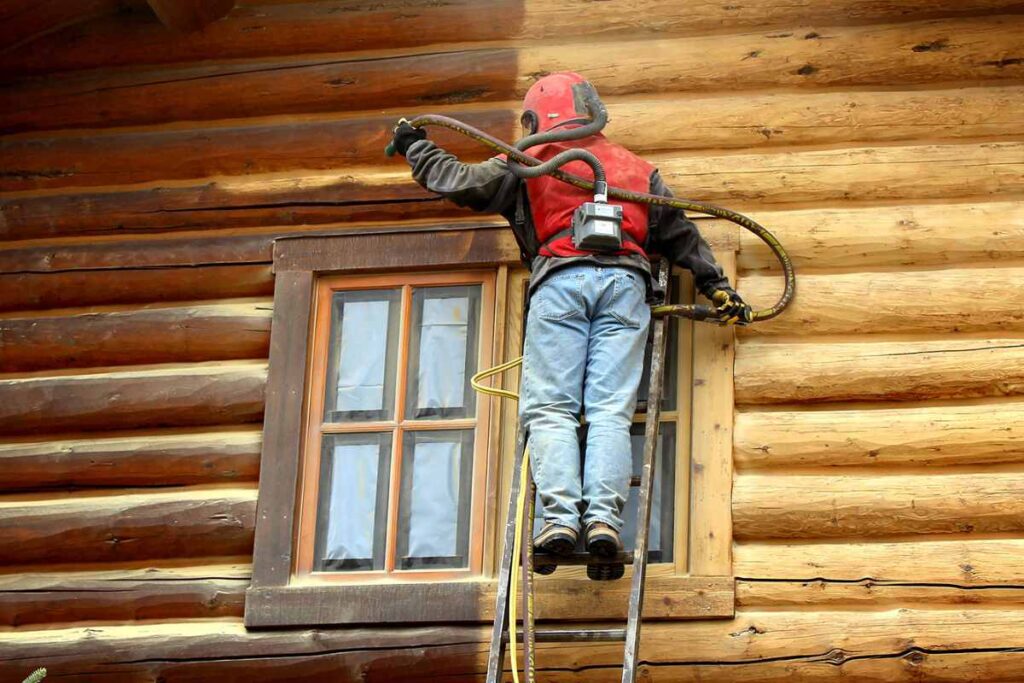
Sandblasting log home walls with silica sand is the fastest way to ruin the logs you are trying to save. Sand is harder than the wood, so it cuts grooves and raises fuzz instead of lifting the finish, and the dust it makes is respirable crystalline silica, which OSHA regulates at 50 micrograms per cubic meter of air. The old finish still has to come off, though. Log Care strips log homes across Jackson Hole, Teton Valley and Star Valley with media blasting, using recycled crushed glass, corn cob or walnut shell matched to the wood and the finish.
This guide covers what sand does to a log, the five risks of sandblasting a log home, the media that work instead, when a log home needs blasting at all, and what the job costs in Teton County.
Already got a sandblasting quote? Request a free assessment and we will tell you what the right media and the right pressure would cost on your house.
What sandblasting does to a log home
Blasting of any kind uses compressed air to drive an abrasive against the surface and lift old stain, paint, mildew and dead wood fibers. The abrasive decides the result. Silica sand is sharp and much harder than pine, fir or cedar, so at the pressure needed to strip a finish it does not stop at the finish. It cuts into sound wood, leaves the surface rough or pitted, and raises a fuzz of torn fibers that has to be sanded or buffed off before any stain will look right.
It also finds every weak spot. Checks get blown open, corners and notches get rounded off, and chinking or caulk next to the blast path gets chewed. What was a finish problem becomes a repair problem.
Sandblasting a log home vs. media blasting: the difference is the media
Contractors use “sandblasting” loosely, so ask what is actually in the pot. Media blasting done right for logs uses softer, rounder or biodegradable abrasives at controlled pressure. The process is still dry, which matters in a mountain climate where trapped water turns into rot, and it still opens the grain so new stain penetrates and bonds.
Stain manufacturer Sashco calls surface preparation the most critical step in achieving stain longevity and warns that blasting done incorrectly can damage the wood. The media and the hand on the nozzle are the whole difference between preparation and damage.
5 risks of sandblasting log home exteriors
- Grooved and pitted logs. Sand etches the surface, and the etching shows through every coat of stain that follows.
- Raised fuzz that drinks stain unevenly. Torn fibers soak up more finish than sound wood, so the wall dries blotchy and fails early.
- Damaged checks, corners and chinking. Sand opens checks wider and tears the edges of chinking and caulk joints, which then need replacement.
- Silica dust. Blasting with sand creates respirable crystalline silica. OSHA’s construction standard, 29 CFR 1926.1153, limits exposure to 50 micrograms per cubic meter over a shift, and that dust settles on decks, vehicles and gardens around the house.
- A surface that cannot be un-damaged. Wood that has been gouged has to be sanded or buffed back, which adds labor and takes material off the log that will never come back.
The media Log Care uses instead of sand
- Recycled crushed glass. Strips heavy coatings, paint and damaged surfaces efficiently and leaves a clean, even surface. Log Care has found it ideal for most of the homes we blast.
- Corn cob. Corn cob blasting log home exteriors is gentle and biodegradable. It removes light finishes and weathering without harming the wood, so it suits maintenance blasts and softer logs.
- Walnut shell. A step more aggressive than corn cob and still gentle on wood. Good for tougher finishes, older homes and logs with carved or decorative details.
- Soda. Baking soda cleans delicate surfaces without damage and neutralizes smoke and mildew odors, but it is rarely enough for full stain removal.
The rule of thumb: glass or corn cob for most maintenance and refinishing work, walnut shell for deeper restoration, soda for special cases. The contractor should choose from the condition of the wood and the finish coming off, and should be able to explain why.
When a log home needs blasting at all
Blasting is for a finish that has failed, not a finish that is tired. It is the right call when:
- The stain is peeling, blotchy or badly faded
- Mold or mildew shows on the wood
- You are switching stain types, for example oil-based to water-based
- You are going from a dark or solid color to a lighter or transparent stain
- Several layers of stain have built up over the years
- The logs were painted and you want the wood back
If the existing finish is sound, a wash, brighten and recoat skips the blast entirely and costs a fraction of it. Homes in the Jackson area typically need blasting every 7 to 10 years, depending on exposure and how well the finish has been maintained. South and west walls usually get there first.
What log home sandblasting or media blasting costs
Owners searching for log home sandblasting usually want a number. In Teton County, media blasting runs $3 to $6 per square foot of log surface. A typical log home here carries 2,800 to 4,200 square feet of exterior log, which puts most whole-house projects between $9,000 and $26,000. The finish coming off, wall height, log condition, the media and masking move the number, and paint is the most expensive finish to remove.
A cheap sandblasting log home quote is not cheap once the sanding, the blown-out checks and the early stain failure are added back in. Full pricing and the six signs your logs need blasting are on our log home media blasting page, and the whole-house math is in our log home restoration cost guide.
How to tell a log home was sandblasted badly
If you are buying a log home or inheriting someone else’s restoration, the marks are easy to read once you know them. Run a hand across a log in raking light. A surface that feels like coarse sandpaper, with shallow grooves that follow the blast path, was hit with a hard abrasive at too much pressure. Look at the stain: blotchy, dark patches where the fibers were torn drink more finish than the sound wood next to them. Check the corners, notches and the edges of checks for rounded, chewed profiles, and look at the chinking lines for frayed edges.
None of that is fatal. Sandblasting a log home damages the surface, not the structure, and a careful buff, a fresh blast with the right media where needed, and a penetrating stain will bring the wall back. It just costs more than doing it right the first time, which is the point of this article.
How Log Care blasts a log home
- Inspection. We evaluate the logs, find rot and choose the media.
- Prep. We mask windows, roofs, decks, landscaping and adjacent surfaces.
- Blasting. Media is applied evenly across every log surface at a pressure matched to the wood. Even coverage is what prevents grooves and holes.
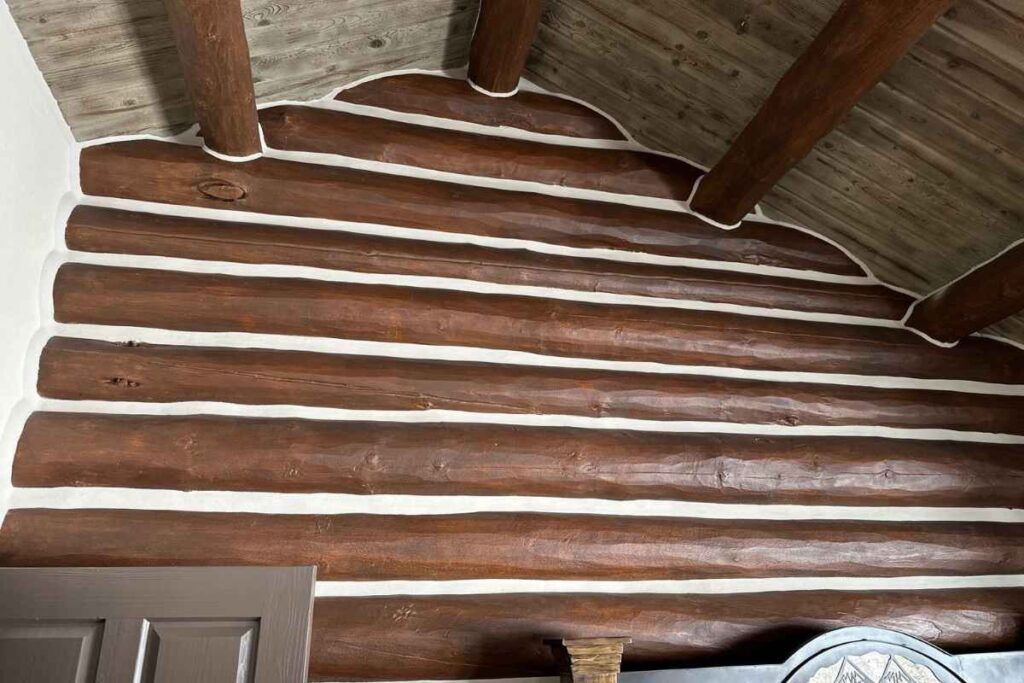
- Buffing. We buff the wood after blasting to smooth the texture so the logs look natural instead of etched.
- Cleanup. Spent media and debris are collected and hauled out.
- Stain within days. Bare wood left in the sun starts to gray almost immediately, so stain and sealer go on as soon as the logs have stabilized.
Questions about sandblasting log homes
Can you sandblast a log cabin? You can, and you will spend the savings sanding out the damage. Media blasting with glass, cob or walnut shell strips the finish without the gouging.
Is glass blasting the same as sandblasting a log home? No. Recycled crushed glass is amorphous, not crystalline silica, and it is run at pressures and angles chosen for wood. Sandblasting log home walls with silica sand is a different material at a different hardness.
Does blasting remove chinking? Sound chinking is masked and worked around. Failed chinking is replaced after the stain goes on, so it bonds to a finished surface. See chinking and caulking.
Can I rent a sandblaster and do it myself? Rental units exist. The risk is grooved logs and raised fuzz from the wrong media or pressure, and fixing a bad blast costs more than a professional one. Sashco’s own guidance says to perfect the method on a small area before blasting an entire home.
What about painted logs? Paint is the hardest finish to remove and the reason we tell owners to never paint a log home. Glass media and patience get it off without scarring the wood.
Get a written estimate before anyone blasts
If a bid says sandblasting log home walls, ask what media is in the pot and what pressure they run. Then request a free assessment from Log Care or call 307-734-9563. We inspect first, match the media to your logs, and put the scope in writing.